UNC Pembroke Welcomes Dr. Daniel LaDu as Adolph Dial Distinguished Scholar of American Indian Studies
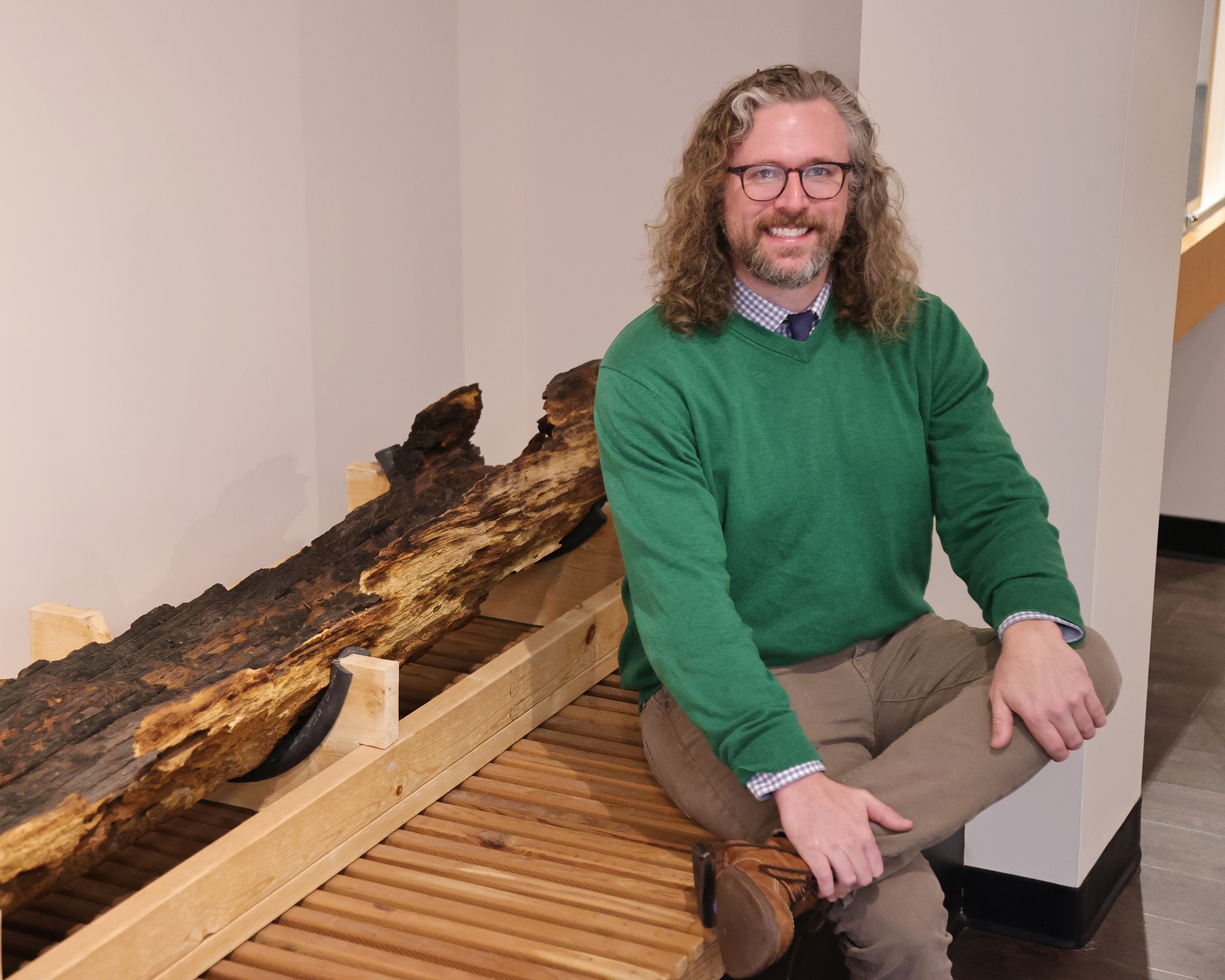
As UNC Pembroke strengthens its role as a leader in American Indian education, the university recently appointed archaeologist and scholar Dr. Daniel LaDu as the Adolph L. Dial Distinguished Scholar — a milestone that signals new opportunities for collaboration, research and student engagement.
Dr. Dial — a Lumbee scholar, educator and founder of the American Indian Studies department — dedicated three decades to shaping generations of students and advancing the understanding of Indigenous histories. His legacy continues to guide the department’s mission, making this appointment a significant moment for the university and the region. The position was established in 2021 through a $1.5 million endowment.
Dr. LaDu considers the appointment an honor and a responsibility.
“One of the first things I did was get a copy of Dr. Dial’s book, The Only Land I Know and read it cover to cover,” LaDu said. “What an incredible history and legacy.
I don’t think about filling (Dr. Adolph Dial) shoes, but about honoring that legacy —bringing my own specialty to this space and serving as an active caretaker of the foundation he built.”
Dr. Shreekha Pillai, dean of the College of Arts and Sciences, said it’s an honor to welcome LaDu to the faculty.
“Just like Dr. LaDu, I read Dr. Dial’s The Only Land I Know as my compass, to learn about the Lumbee people by reading this formidable UNCP faculty, historian and eminent persona’s book,” Pillai said. “It is an exciting moment for our Department of American Indian Studies and I look forward to Dr. LaDu’s contributions to grow our community of scholars and learners at BraveNation.”
LaDu grew up in Asheville and said his return to the state — and to a university with a powerful Indigenous mission — feels like a homecoming. He earned his bachelor’s degree in anthropology from UNC Chapel Hill and completed his master’s and doctorate in anthropology at the University of Alabama.
Though widely recognized for his archaeological fieldwork across the Southeast and Lower Mississippi Valley, LaDu’s academic path began with a spark of curiosity.
“I always loved the past. As a kid, I told everyone I wanted to study dinosaurs,” he said. “But a senior-year opportunity at an Indian mound site in Natchez, Mississippi — excavating, touring sites, learning the deep cultural history — had me hooked. That experience helped me understand that archaeology connects us to dynamic human stories, not just artifacts.”
LaDu brings 15 years of archaeological field experience, nearly a decade in academia and time spent in the private sector working in cultural resource management — an industry he says grounds his teaching in practical skills.
Before joining UNCP, LaDu served six years on the faculty at the University of Southern Mississippi. The opportunity to help strengthen and expand Indigenous-focused research and teaching at UNCP immediately appealed to him.
“It didn’t take much digging to see the amazing things happening here,” he said. “The small class sizes, the national recognition, the diversity — it all creates a space where you can truly invest in students and watch them grow. That’s what drew me here.”
He was equally inspired by the energy already thriving within the American Indian Studies department, citing recent lectures, exhibits and community partnerships as signs of a program on the rise.
“It’s exciting — and hard to keep up with everything already happening,” he said. “My goal is to capture that energy, strengthen connections and contribute new opportunities, especially in archaeology.”
As the Adolph L. Dial Distinguished Scholar of American Indian Studies, LaDu joins a department rooted in UNCP's very history and identity. The American Indian Studies department — home to the Southeast American Indian Studies program and supported by the Museum of the Southeast American Indian — offers students an opportunity to explore Indigenous histories, cultures, sovereignty and contemporary issues through an academic lens. UNCP’s undergraduate degree options in American Indian Studies provide a direct pathway for students seeking to engage with the region’s Indigenous communities, pursue museum or cultural heritage work, or prepare for careers in tribal government, public history, research or education.
This fall, LaDu is teaching two sections of Introduction to Cultural Anthropology and will reintroduce archaeological methods courses in the spring. He is also developing an archaeology lab at the Office for Regional Initiatives facility, which will serve as a hub for teaching, community-based research, and student-led projects.
LaDu envisions strong collaboration with regional Tribal partners, the Office of State Archaeology, the Lumbee Tribe and organizations across the region.
“Archaeology must be multivocal,” he said. “To understand Indigenous histories, communities must have input and a stake in the work. One of the most rewarding things is helping students imagine themselves in these roles and providing the tools they need to succeed.”
LaDu is already exploring potential partnerships with the Lumbee River Archaeological Project and represented UNCP at the Southeastern Archaeological Conference in Baton Rouge, Louisiana in November.
As the Adolph Dial Distinguished Professor, LaDu will help the department continue advancing toward a future School for Southeast American Indian Studies — an effort Dial dreamed of initiating.
“Dr. Dial clearly understood the role education plays as a great equalizer,” LaDu said. “UNC Pembroke embodies that promise today. I ’m honored to help continue that mission while bringing new research, new collaborations and new opportunities for our students.”